Designing an Integrated Information, Financial, and Mobile Literacy Curriculum for Senior Citizens
A research initiative aimed at bridging the digital divide, reducing financial anxiety, and building digital resilience among Sri Lanka’s elderly population.
The Research Challenge
Despite high smartphone ownership, a significant “usage gap” exists among senior citizens in Sri Lanka due to mistrust of digital financial services and fear of scams. This project designed an integrated, socioculturally responsive curriculum to transform seniors from passive technology users into active, secure participants in the digital economy.
Curriculum Architecture
Developed iteratively using an evidence-based “Financial-first” approach to prioritize immediate relevance to learners.
Financial Literacy
Practical guidance tailored to senior needs, including budgeting, CBSL safety instructions, evaluating loans, investment basics (like Unit Trusts), and taxation procedures.
Mobile & Security
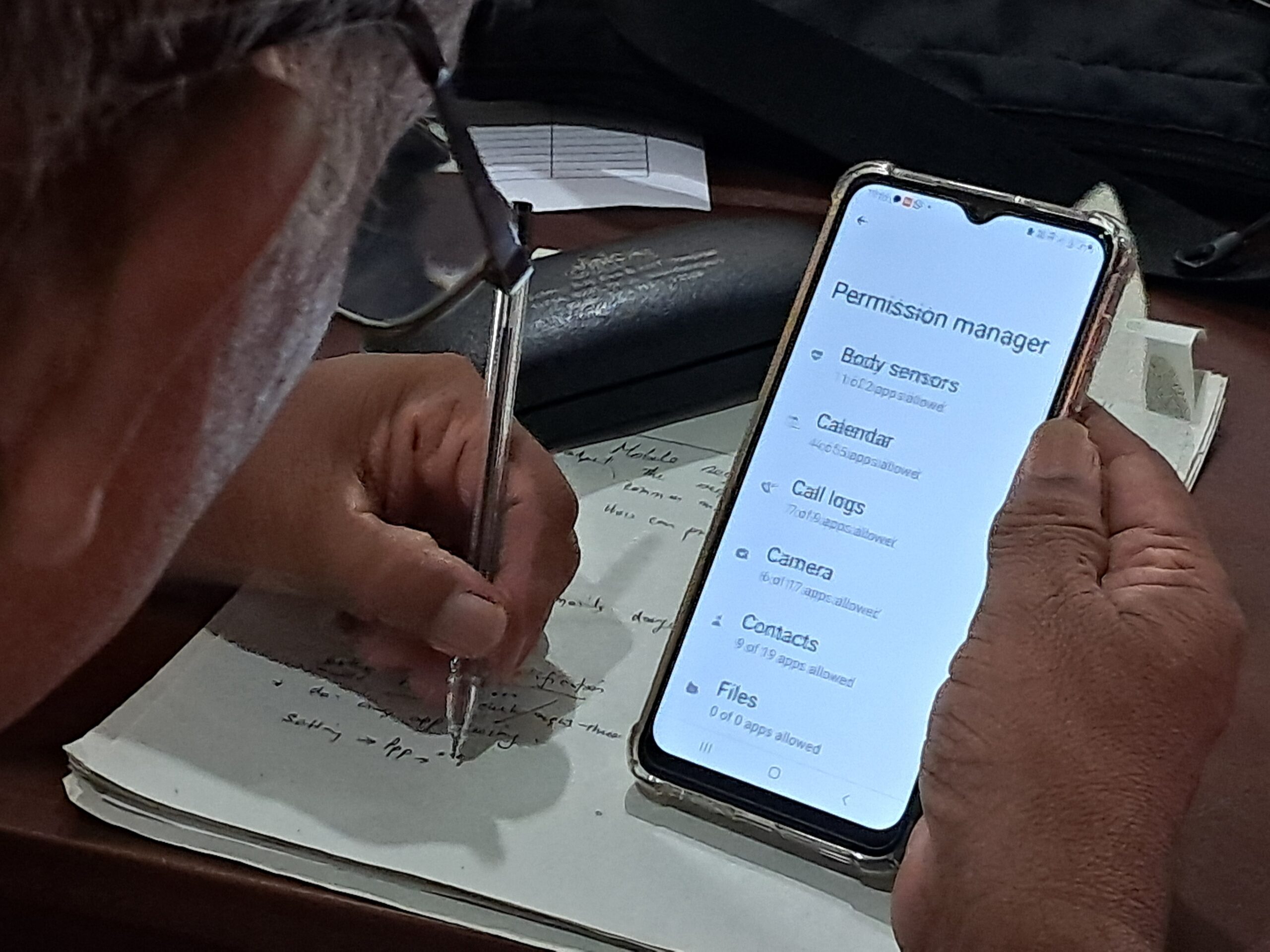
Step-by-step guidance on accessibility settings (font size, voice typing), app-based banking, scam awareness, and heavy emphasis on online security protocols.
Information Validity
Training on evaluating information validity and utilizing modern tools, including an introduction to AI-assisted information verification using tools like ChatGPT.
Final Approved Curriculum
The complete, 10-week curriculum is available for educators, libraries, and public service institutions.
* The National Institute of Library and Information Sciences (NILIS), University of Colombo, will further support this curriculum with ongoing content and resources.
Research Methodology
The ADDIE Framework
We utilized the robust Analyze, Design, Develop, Implement, and Evaluate framework to structure our curriculum development. This ensured rigorous educational standards and iterative improvements based on continuous feedback.
The Empowering 8 (E8) Model
Developed by the National Institute of Library and Information Sciences (NILIS), this model guided how trainees interacted with information across eight distinct steps.
Stages of Curriculum Development
- Literature Review & Baseline Survey: Identified the specific needs, technological gaps, and financial behaviors of senior citizens.
- Pre-training Workshop & Draft 1: Initial testing of concepts focusing on mobile basics and financial anxiety reduction.
- Iterative Refinement (Draft 2): Transitioned to a “Financial-first” approach, integrating accessibility checklists and clear instructor guidelines.
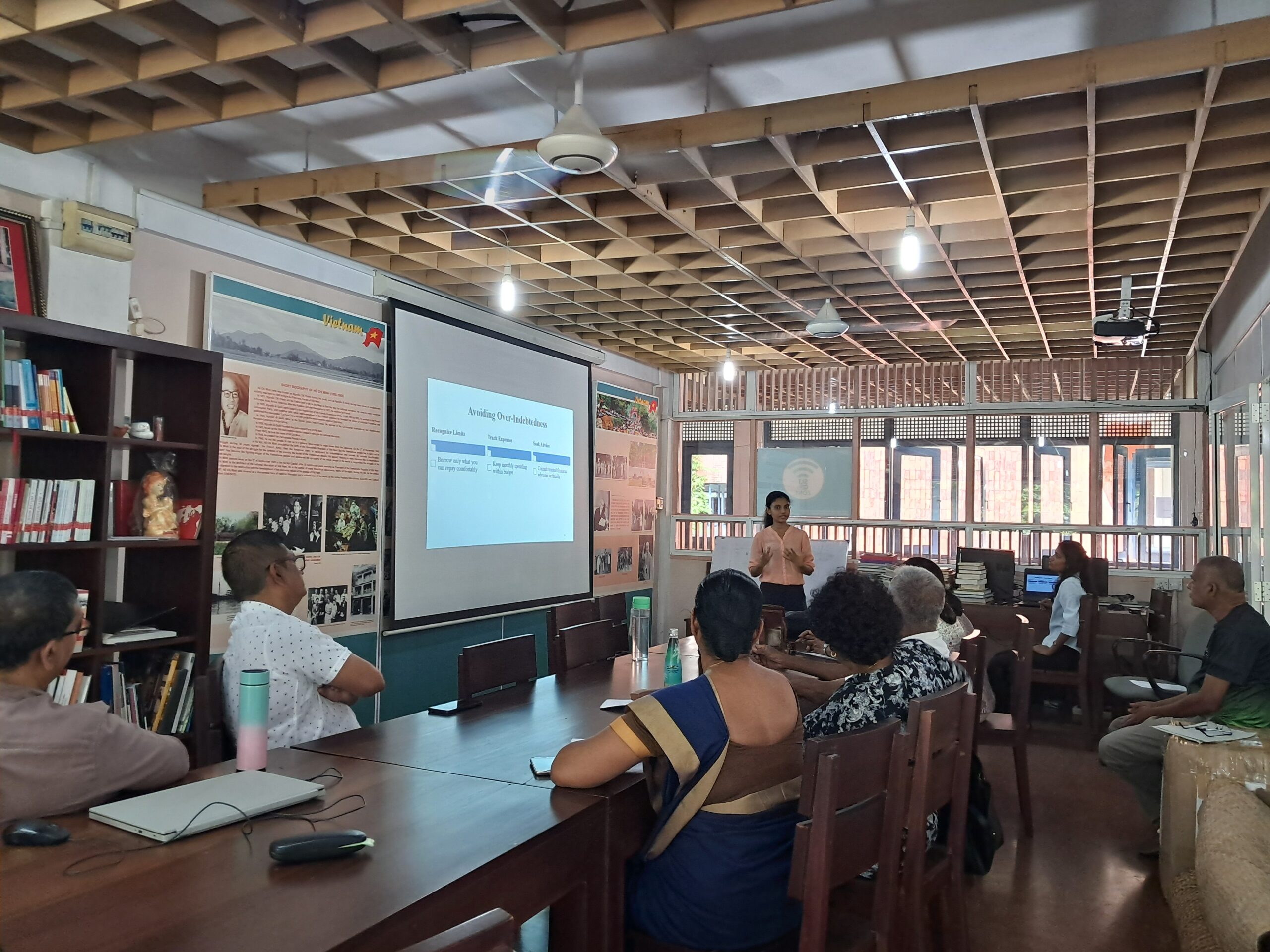
- Pilot Training Sessions: Conducted 10 specialized, practical training sessions at the Colombo Public Library with continuous participant feedback.
- Final Curriculum Approval: Finalized the instructional design based on Kirkpatrick evaluation metrics and observed behavioral changes.
Impact & Evaluation Results
Evaluated using the Kirkpatrick Four-Level Model, the training yielded highly effective results, confirming that senior digital empowerment heavily relies on trust-building and psychological safety.
4.38/5
Reaction
High satisfaction with session relevance.
4.17/5
Learning
Strong skill acquisition observed.
4.32/5
Behavior
Successful transfer into daily habits.
Training Sessions in Action
Project Team & Partners
A collaborative effort combining academic rigor with public service implementation.
Principal Investigator: Prof. R.C.G. Gamage
Collaborators: Dr. Prasanna Ranaweera, Ms. Varuni Gangabadaarachchi
Partner Institutions:
National Institute of Library and Information Sciences (NILIS), University of Colombo
Colombo Public Library